FAMOUS POLES
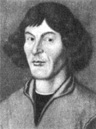
Mikolaj Kopernik (Nicolaus Copernicus) 1473-1543
Studied at the universities of Cracow, Bologna, Padua and Ferrara. Great Polish scientist, mathematician, economist, physician, astronomer Considered universally the father of modern astronomy. His revolutionary heliocentric theory: the earth rotates daily on its axis and planets revolve in orbit around the sun. After years of study, delayed by the religious and political climate, Copernicus published his great work, De Revolutionibus Orbium Coelestium in the year of his death, thus laying the foundation for modern developments in astronomy.
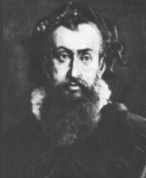
Jan Kochanowski 1530-1548
The greatest pre-Romantic writer in all Slavdom, he was the father of Polish poetry. A humanist educated in Italy and Poland. From 1564 till 1570, the king's secretary. He was a vital, many-sided and prolific writer: his surviving lyrical poems and satires include 16,700 verses in Polish and 7000 in Latin. Among his works are his Laments, translations of the Psalms into Polish and The Dismissal of the Greek Envoys, the first Polish drama.
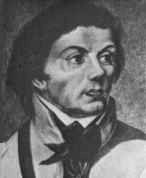
Thaddeus Kosciuszko 1746-1817
One of Poland's greatest heroes and patriots, he fought for freedom with the American Revolutionary Army. Kosciuszko distinguished himself by building and fortifying West Point, and became engineer of the Southern Army. In 1783, the United States Congress offered him citizenship, land, a pension and the rank of Brigadier General. He returned to Poland where he led the Insurrection of1794. His indomitable devotion to the cause of freedom made him a symbol of the pursuit of freedom everywhere.
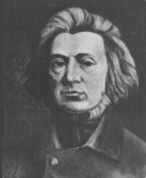
Adam Mickiewicz 1798-1855
Acknowledged as Poland's greatest poet. Whatever his chosen form - ballad, poetic tale, romantic drama, or epic - the result was artistically brilliant and profound in meaning. The leader of Polish Romanticism, he created such masterpieces as The Forefathers' Eve, Grazyna, Konrad Wallenrod, and the great Pan Tadeusz. Succeeding generations of Polish poets were to feel the force of his genius. Was an exile in Russia between 1824 and 1829 for his political activities. Spent the rest of his life in Western Europe.
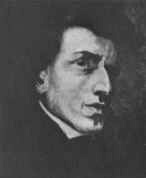
Fryderyk Chopin 1810-1849
Began composing music when he was seven and was giving public recitals at the age of eight. A giant among composers of all time, he is perfection itself within the self-imposed limits of short compositions. His music is simultaneously deeply Polish and universal; its beauty and lyricism still speak to all men. Chopin's keyboard technique and novel handling of harmony influenced generations of pianists and composers alike. He composed 58 mazurkas, 17 polonaises, 21 nocturnes, 4 ballads, 4 scherzos, 3 sonatas, 2 fantasies, 26 preludes, 27 etudes, 17 waltzes, 4 impromptus, rondos, variations, lullabies, barcaroles, 2 concertos, 4 other compositions with orchestra, songs and chamber music.
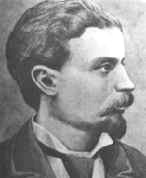
Henryk Sienkiewicz 1846-1916
In 1905, four years after the first Nobel Prize, he was the first Polish author to receive the award for literature. He wrote about the most heroic and tragic episodes of Polish history. His best known work is Quo Vadis? (1896), an analogy of his compatriots and Russia to the early Christians and Imperial Rome but his greatest work is the trilogy With Fire and Sword, The Deluge and Pan Wolodyjowski (1883-1888). In his day, his country had ceased to exist politically. Through his historical writings he was, as he said, the Ambassador of Poland to the world at large.